Meridian Crashes the Canvas: Inside GCWUS's Degree Show
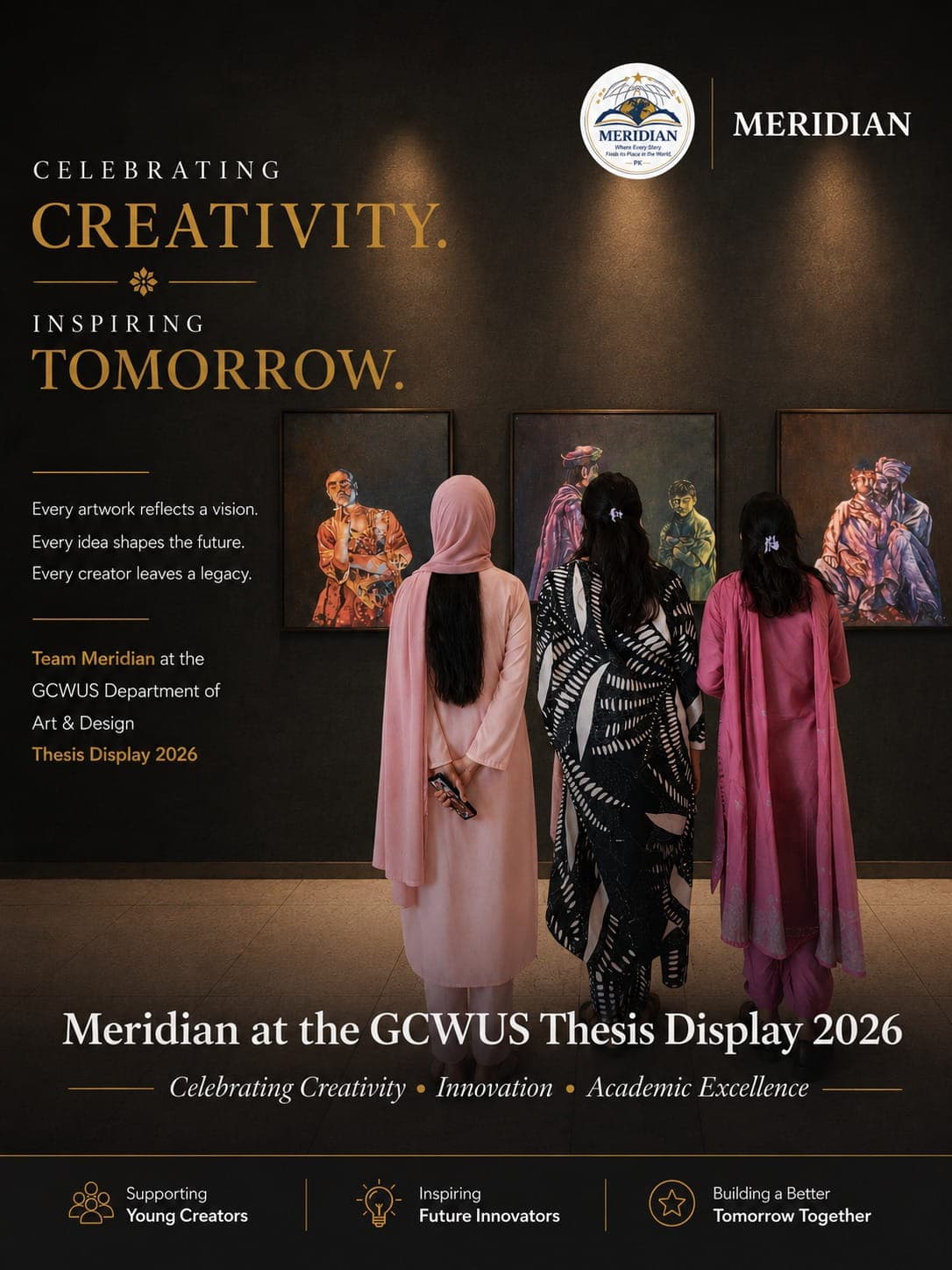
From the 19th to the 23rd of June 2026, the final year BFA students at GCWUS turned their department into something that felt less like a university hallway and more like a series of different emotional universes stacked next to each other. We went in expecting "nice paintings, some clothes on mannequins." We left needing a minute. Several minutes, actually.
Here's the thing about a thesis display — it's not just the final pieces you see. It's four years of a person deciding what they actually want to say. Then figuring out, completely from scratch, how to say it. Every fabric choice, every print, every tiny brush stroke was a decision someone made alone at 2am probably. We got to talk to a few of the students about that process, and honestly? The backstage story was almost better than the display itself.
Every artwork starts as a question nobody else thought to ask.
A Tribute to Her Family of Doctors, Stitched Into Fabric
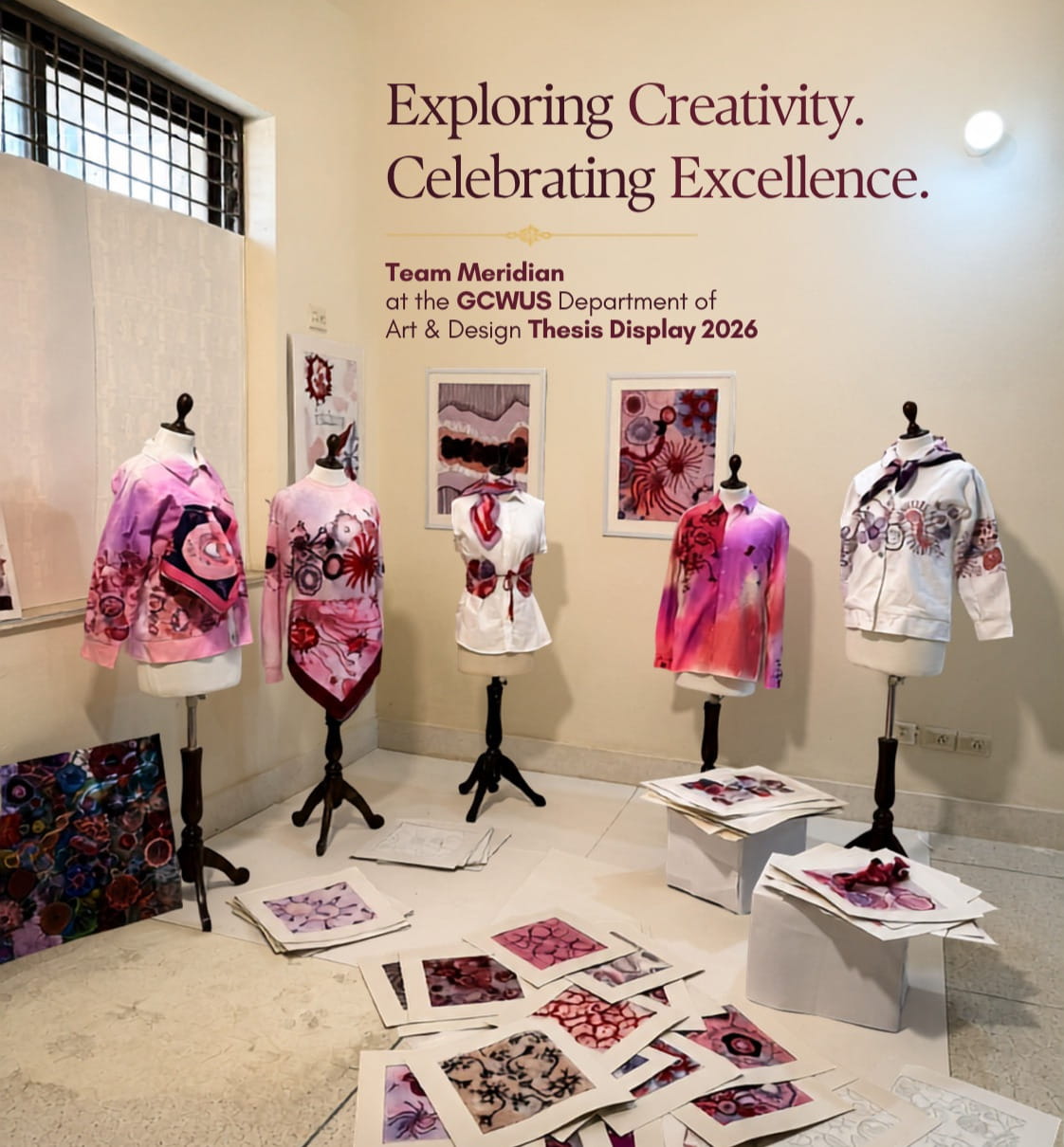
One of the first rooms hit us with something we did not see coming — cell structures, actual microscopic patterns, turned into prints on jackets, tops, and scarves. Pink and burgundy blooms that look like florals from far away turn into something way more clinical up close: membranes, nuclei, little organic chaos. It's biology but make it wearable.
The student behind this told us it wasn't a random theme. Her family has a background in medicine, and she grew up around that world her whole life. This was her way of bringing that inheritance into her own field — translating something she'd watched people she loves study for years into something you could actually wear. It's not science borrowing from art. It's one daughter finding her own language for her family's legacy.
Some of us inherit a stethoscope. She inherited a way of seeing — and turned it into thread.
Inspired by the Sunset
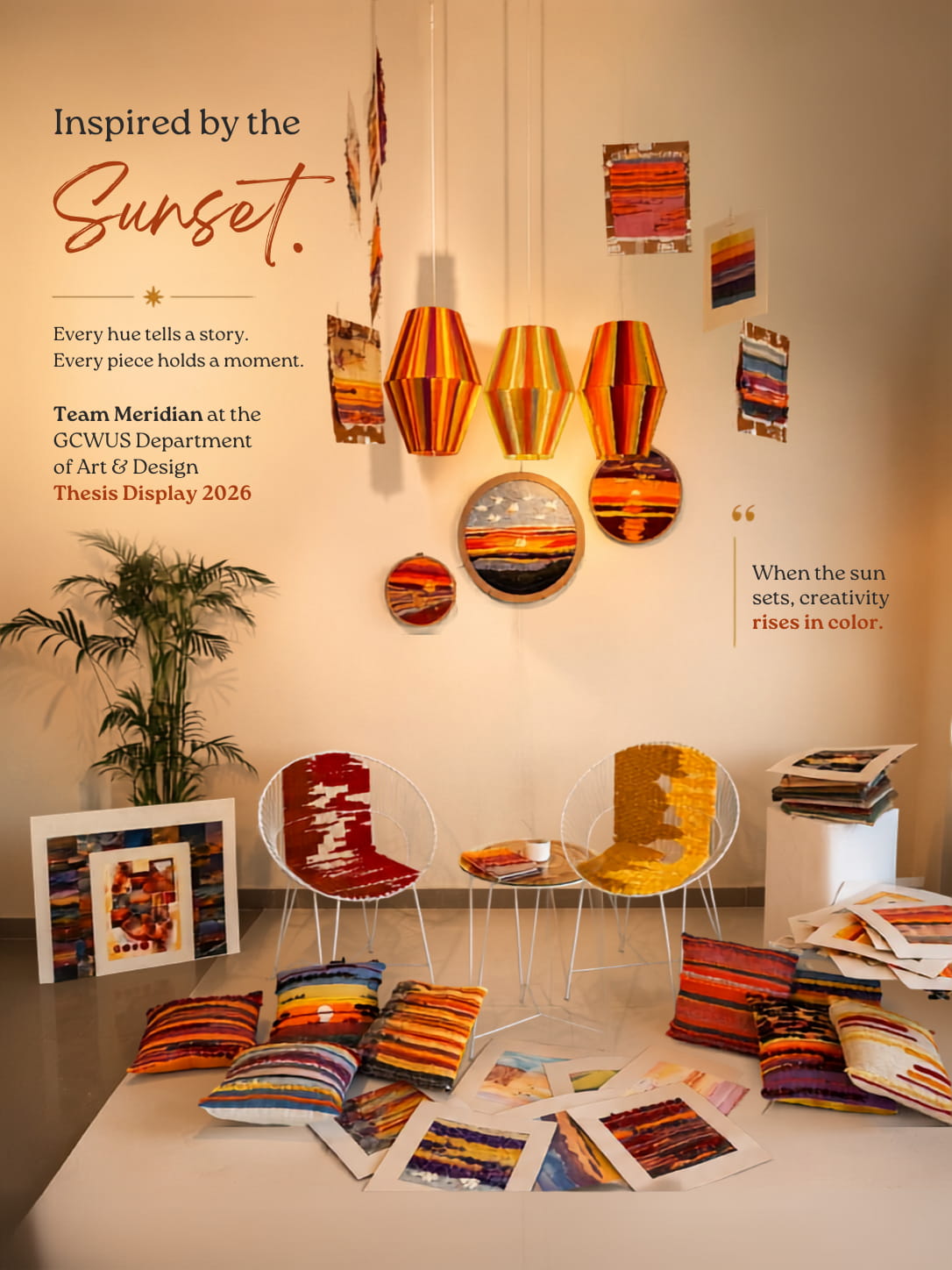
This one was just warmth. Woven lampshades in orange and maroon stripes hung from the ceiling like little lanterns, embroidery hoops held tiny stitched sunsets, and the chairs woven in matching sunset gradients. Cushions everywhere. A whole vibe.
The display captured the specific golden-hour feeling — the one where everything looks a little softer and a little more forgiving. Every piece, from the wall hangings to the seat weaving, was made by hand, thread by thread. We sat down on one of the chairs purely to see if it felt as warm as it looked. It did.
When the sun sets, creativity rises in color. Someone just had to stay up and weave it.
Urdu Punchlines on Tote Bags
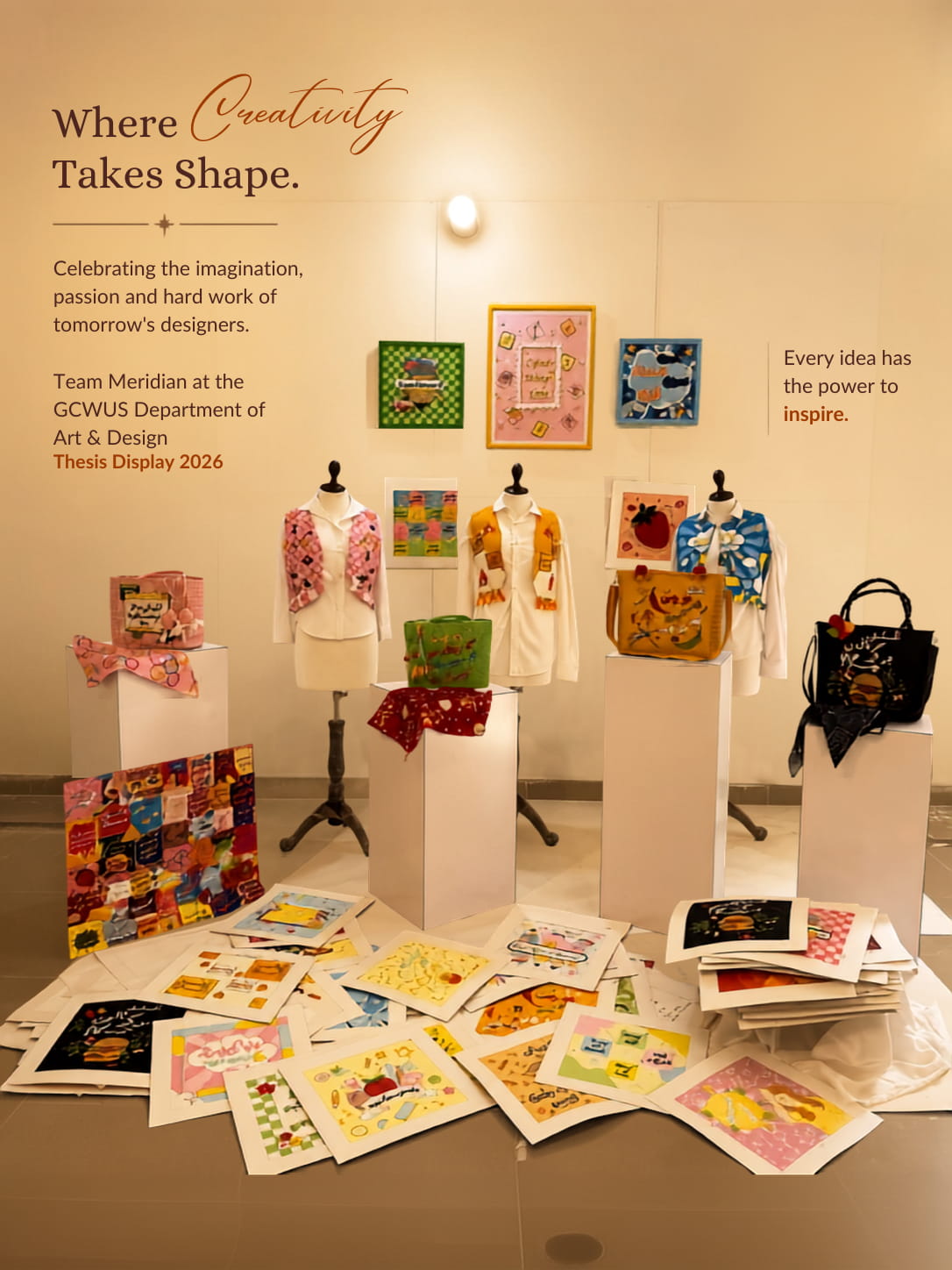
This display was the most "we-get-it" room in the entire show. Urdu slang, local humor, and everyday punchlines printed straight onto jackets, bags, and scarves. Done in the kind of bright, playful illustration style that feels like a meme come to life. A tote bag with an "insaan ban jao bohat scope hai" joke on it. A jacket with a phrase your nani has definitely said to you. It's funny, it's nostalgic, and it's deeply, unapologetically local.
Talking to the students here, you could tell they wanted to make people from home laugh first and think second. No translating required — no explaining the joke. If you know, you know. That kind of confidence in your own culture's humor, on a thesis display, in front of external examiners? Respect.
This is exactly the kind of creative energy we celebrate on our Creative Marketplace — where local creators turn their ideas into something the world can actually hold, wear, and use.
The funniest art doesn't need a caption; your culture already wrote it.
The Beauty of Kintsugi
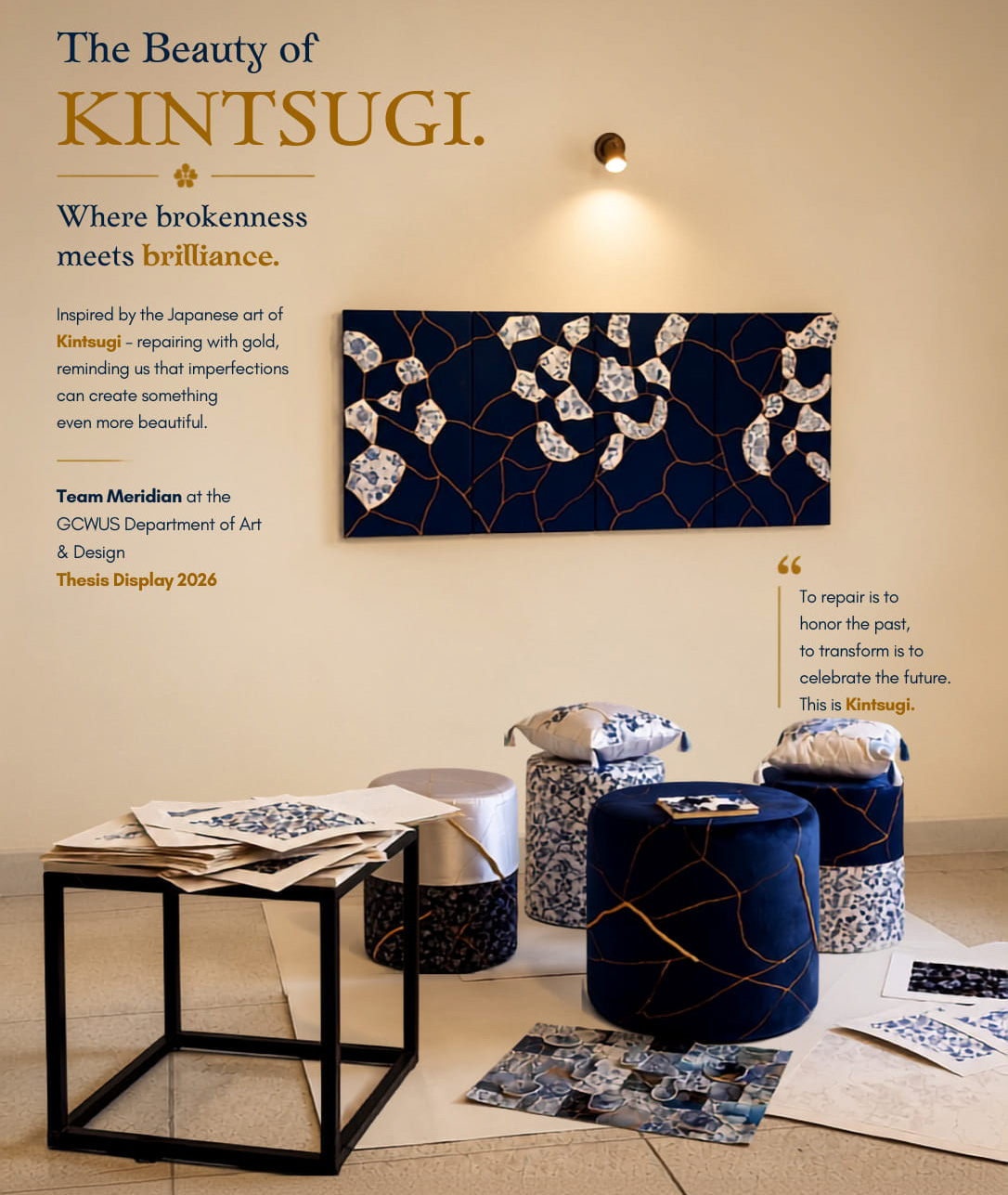
Inspired by the Japanese art of kintsugi — repairing broken pottery with gold instead of hiding the cracks — this display turned that philosophy into navy and gold wall panels, poufs, and cushions, with gold seams running through deep blue "broken" patterns like lightning that decided to be elegant instead of violent.
This display had an intention behind it: nothing here is about being flawless. It's about what happens after the break, and how repair can become the most beautiful part of the whole piece. A few of us stood in front of the gold-cracked stools for way longer than we probably needed to.
To repair is to honor the past. To transform is to celebrate the future. That's kintsugi — and maybe that's us too.
Sweet Ideas, Creative Delights
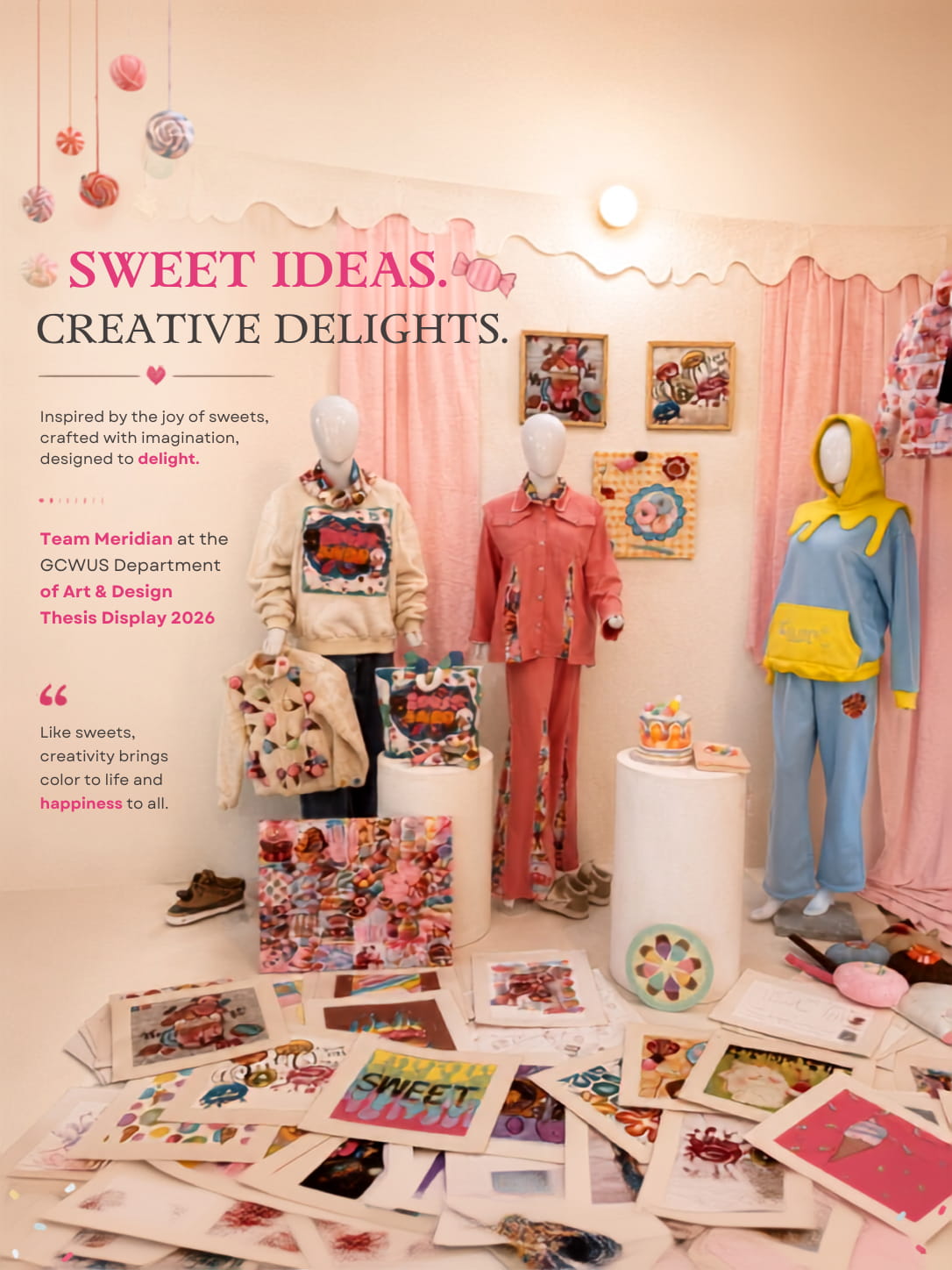
This room had candy-colored knitwear, dessert-shaped soft sculptures, and a blue hoodie with what can only be described as a melting-ice-cream collar situation. Pastel pinks, soft yellows, little embroidered sweets scattered across jackets and bags. It felt like walking into a bakery that also sells streetwear.
The idea here was simple and honestly kind of genius: joy doesn't need a complicated explanation. Sweets make people happy, so why not just put that happiness directly onto something you can wear? No overthinking required.
Like sweets, creativity brings color to life — and happiness to everyone who stops to look.
Hearts Break. Ideas Heal.
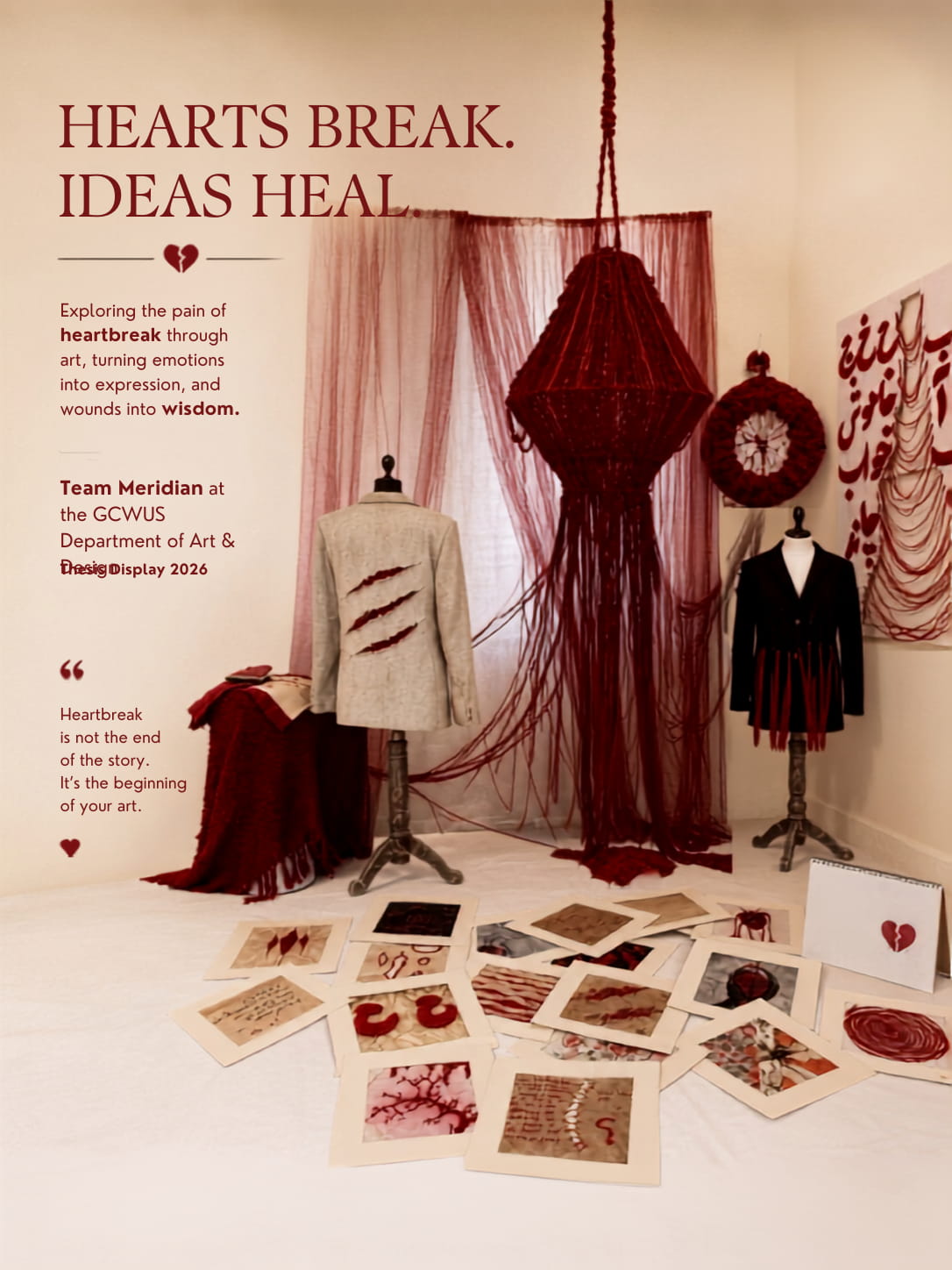
Everybody has gotten their heart broken at least once or twice, right? This room turned heartbreak into something more. Deep red macramé hanging from the ceiling like a chandelier made of grief, sheer pink curtains, a blazer with three long slashes torn across the back, a jacket with a fringe skirt made of frayed red threads. Urdu calligraphy on the wall, written like a wound that turned into a poem. A broken mirror mirroring broken hearts.
This display comes from a genuine experience — the kind everyone goes through but rarely turns into something this honest. Every red thread on that mannequin was something we don't say out loud, so it's stitched instead.
If you've ever turned a feeling into something creative, you already know the kind of courage this takes. That's what writing and creating at Meridian is about too — giving shape to the things words alone can't hold.
Heartbreak is not the end of the story. It's the beginning of your art.
The Pain You Can't See
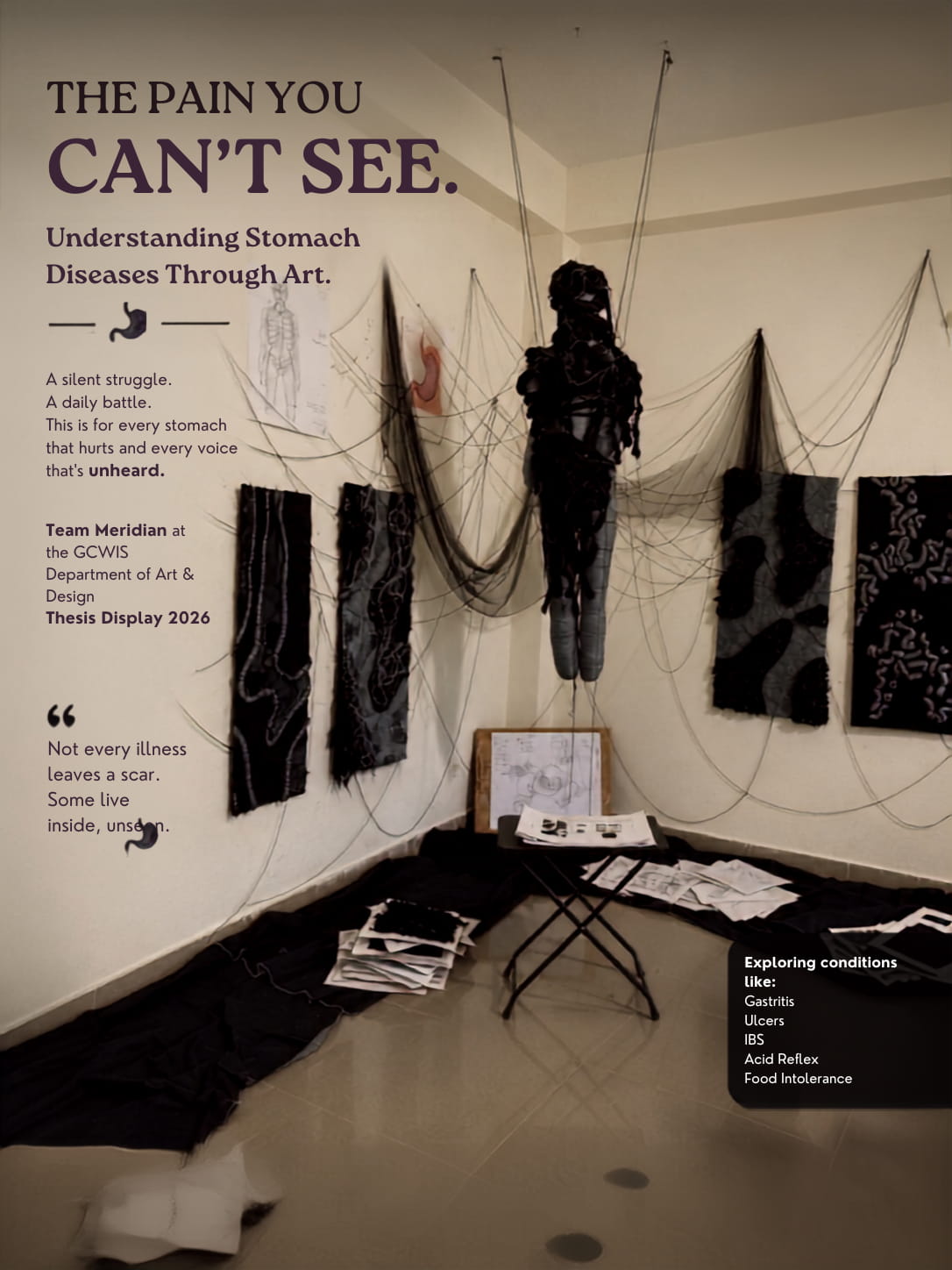
This display was, without question, the most personal room in the entire show. A figure made of black fabric and netting hung from the ceiling, wrapped and constrained, surrounded by anatomical sketches of the stomach. The display was built entirely around chronic stomach conditions like gastritis, ulcers, IBS, acid reflux, and food intolerance — illnesses that don't show up on the outside but absolutely run someone's entire life.
This one wasn't hypothetical. It came from the artist's own experience of living with a condition no one could see and, for a long time, no one really believed. The black netting wrapped around the figure was meant to feel like that exact sensation: trapped inside your own body, in pain that has no visible proof. It's one of those displays that makes you rethink every time you've doubted someone who said, "my stomach hurts" and changed nothing about your day for them.
Not every illness leaves a scar. Some live inside, unseen — until someone has the courage to give them shape.
What We Walked Away With
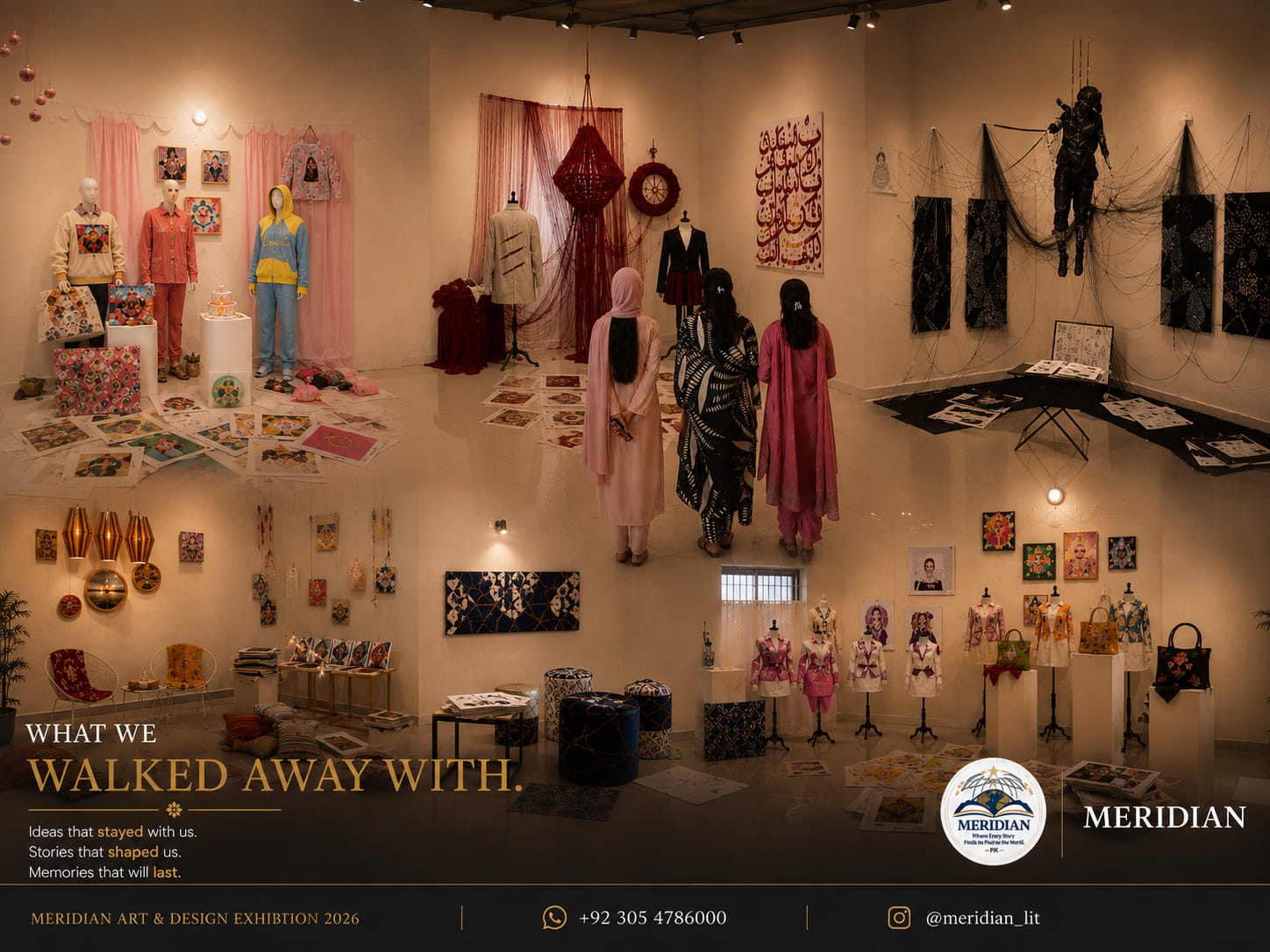
Family legacy turned into fabric. Heartbreak turned into thread. A stomach condition turned into something you could finally see. What struck all of us at Meridian wasn't just the talent on display — it was how much of themselves these students were willing to put into something that strangers would walk past in a few minutes.
Every single student we spoke to said some version of the same thing: it started with one idea they couldn't stop thinking about, and four years later, it became a room you could walk into. That's the whole thing about creativity, honestly. It doesn't ask permission to start small.
Every story finds its place in the world. Sometimes that place is a thesis display in Sialkot, and that's more than enough.
To every student who let us in on their process, their late nights, and their thread-by-thread honesty — thank you. We came to look at art. We left with new reasons to believe in it.
If their courage inspires you to share your own creative work with the world, Meridian is always looking for new voices.